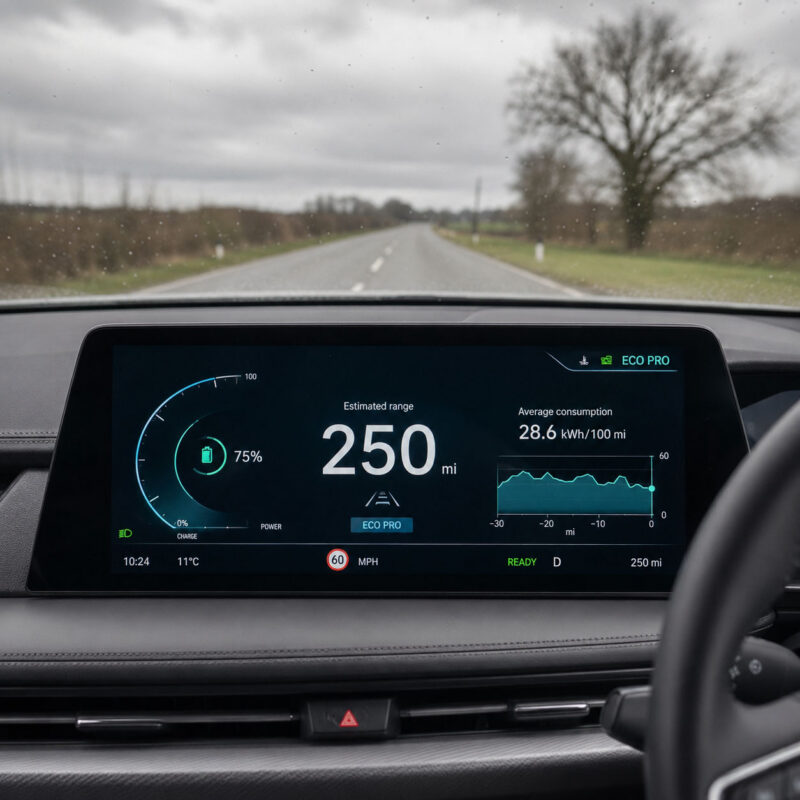
Accessible battery health information is vital to boosting buyer confidence in used electric vehicles
Demand for new electric vehicles has been growing in recent years, with sales of battery EVs long having surpassed that of diesel cars to make up more than 16% of the market.
However, that’s still short of the 22% required to meet the government’s targets. In addition, used EVs have been having something of a bumpy ride, with recent Society of Motor Manufacturers and Traders (SMMT) figures suggesting they represent just 2.1% of the UK’s second-hand market. Their values are falling, too, even in the current surprisingly buoyant market, with Autotrader reporting that used EV prices have dropped 17% year-on-year.
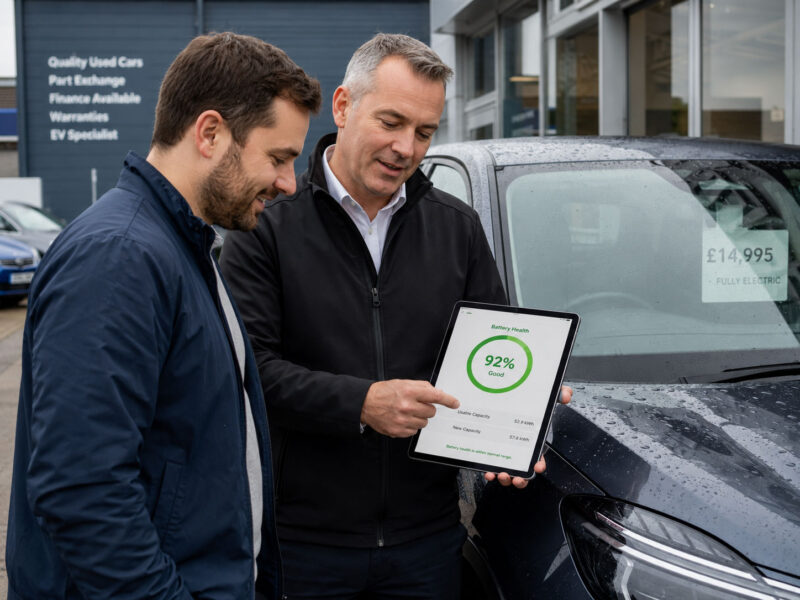
A healthy second-hand market is crucial to maintaining sustainable new vehicle sales. Any softening in residual values leads to less competitive financing, making new cars less affordable and impacting sales. Used cars, by definition, are yesterday’s new cars, and if new sales falter, that not only slows the EV transition and reduces the chances of achieving the government’s targets – it also reduces the number of EVs on the forecourt, pushing used buyers back to their familiar ICE market. And while falling used EV values may be good news for canny buyers, Auto Trader reports that 9-in-10 new buyers also looked at a second-hand one, further exacerbating the situation.
What’s happened to used EV values?
Analysis by market intelligence provider Indicata shows that prices of used EVs separated from their ICE counterparts in the middle of 2020, with used petrol cars being worth the most, closely followed by diesels, and then hybrids.
Used EV prices peaked in Q3 2022 as demand and the semiconductor shortage weakened supply. But since then prices have been on a downward spiral as OEMs started to push discounted new and nearly-new EVs onto the market. This coincided with the first used EVs coming back to the market in volume from two- and three-year personal finance, leasing and salary sacrifice contracts.
Demand could not keep up with this increased supply, and as a result, used EVs crashed in 2023 with prices falling by over 20% in just six months.
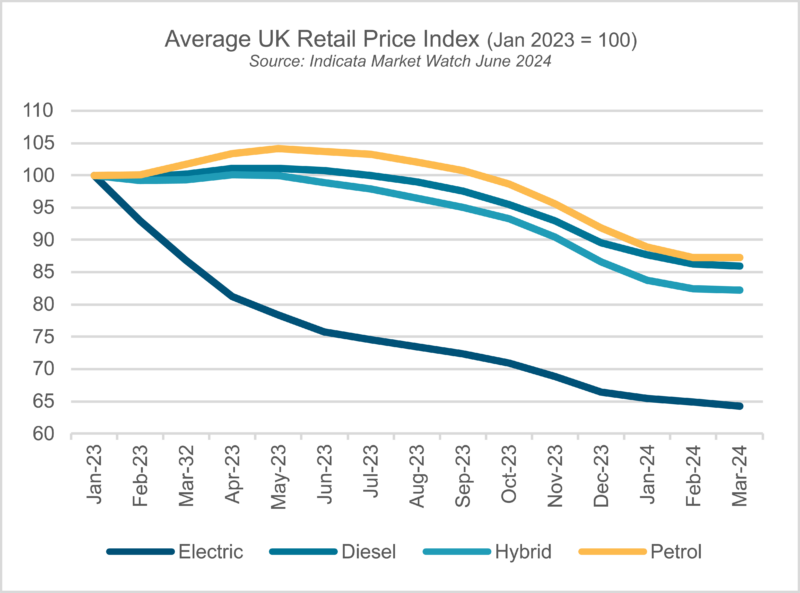
Average UK Retail Price Index (100=Jan ’23) Source: Indicata Market Watch June 2024
On the positive side, this led to sales of used EVs increasing by 67% to record their best year yet, with 118,973 transactions during 2023. However, when judged against the 7 million other transactions that made up the used car market that year, second-hand EVs still occupied a tiny corner of the marketplace, at just 1.64%.
Why aren’t more people buying used EVs?
The same barriers people cite to their own personal EV adoption – such as the lack of charging infrastructure, no off-street parking, and the comparatively high price – are just as relevant to used buyers as they are to new car customers.
Crucially, however, there is one more concern that applies uniquely to the second-hand market: battery health.
Research by the Green Finance Institute revealed that fear of poor battery health is the single biggest barrier to EV adoption, with 62% of those who said they wouldn’t buy a used electric car citing battery lifespan as the reason why.
Consumers’ negative experiences with battery degradation in smartphones and other devices continue to reinforce this concern. However, while an iPhone will gladly report the current state of health of its battery, few – if any – EVs offer the same facility.
How can the industry address this?
Leasing companies, dealer groups and even auction houses are becoming increasingly mindful of this problem. Some have embarked on their own initiatives, similar to the familiar HPI check, to provide certification of a battery’s health if it meets certain thresholds.
However, this fragmented approach is in danger of creating a series of competing standards that struggle to gain traction as a result. What’s needed is an independent industry standard that all parties can sign up to.
Battery passports will become a legal requirement for all electric cars in 2027. Alongside information regarding the origin of their raw materials and their recyclability, it is also possible to store information regarding the battery’s usage and its current state of health.
Battery management systems have become remarkably adept at accurately predicting a battery’s remaining useful life, particularly those that make use of AI-powered algorithms and complex physics-based modelling. Given the already highly connected nature of modern vehicles, it would be trivial to expose this information to a potential buyer in an easy-to-understand format similar to that already available to smartphone users.
By making this information accessible to the consumer, used EV buyers could be provided with the reassurance they crave that a second-hand electric vehicle is not about to leave them stranded at the roadside with a dead battery and a hefty bill for its replacement.
For electric vehicles to move beyond the early adopters and into the mainstream, it is crucial that the industry delivers the consumer confidence necessary to underpin a thriving second-hand EV market.
Looking for automotive PR support?
If you’re looking for people who understand the industry, the media and the moving parts behind a good story, we should talk.
Talk to loop