Has Facebook killed the classic car club?
The role clubs play in the preservation of our motoring heritage is just as important today as it has always been. They act as a central hub of definitive information, as gatekeepers to a treasure trove of historical documents and photographs, and as arbiters and valuers to official bodies such as the DVLA. They work tirelessly to collate information from disparate sources, dole out recommendations for suppliers in times of need, and often go as far as to commission the remanufacture of obsolete parts to keep their members on the road where they belong.

Yet despite this, and in the face of rising classic ownership, it appears club membership is falling. In fact, 32% of clubs surveyed by the Federation of British Historic Vehicle Clubs said they expect their membership to decrease over the next five years.
At first glance, this seems rather puzzling. Clubs are continuing to provide the same services they’ve always done, with busy calendars of events and regularly-published magazines. But perhaps that’s part of the problem – the status quo is no longer a thriving model for success.
Clubs used to communicate with their membership largely by post, and a magazine or newsletter was a central part of that conversation. But gone are the days when a technical problem would be solved by submitting a letter to the editor, printed in the following issue, to hopefully elicit an answer in the next. The immediacy of the internet has long made it the first port of call, and although 85% of clubs reported having a website, only 69% have a presence on social media, with much of that restricted to the larger clubs.
With so much information now freely available through a quick Google search, the traditional model of locking-up the juiciest content behind a membership paywall can be off-putting in this digital age. And while professionally-produced magazines still hold a certain cachet, members are increasingly asking for digital delivery.
For some, the format of the community itself can be a barrier to joining. Clubs mean committees, and committees can lead to politics, while the need to hold AGMs and elections is often seen as stuffy, particularly by the young. FBHVC’s research suggested that only 11% of clubs make special arrangements for younger members, meaning that 9 out of 10 clubs don’t.
Much of this activity has now moved to Facebook groups and Instagram. Gone are the structured threads and easy searchability of online forums, replaced by the ephemeral nature of social media. As a result, discussion is unordered and chaotic, posts are fleeting and disappear at the whim of a faceless algorithm, and searching for information is all but impossible.
It may seem regrettable, but perhaps we should acknowledge that the online discussion forum has been a victim of nothing more than human nature and the relentless march of technology.

Forums have been around for a long time. They can trace their roots back to the dial-up bulletin boards of lore that predate the invention of the internet, and that can make them seem old-hat by comparison. As a species, we can’t help but find ourselves attracted to the new and the shiny, so it’s perhaps only natural that the traffic should drift away.
More pivotal, however, has been the change in how we interact with the internet. In the Nineties, we’d sit at a desk and use a keyboard to craft a carefully-considered missive. It was a deliberate act that required making a commitment, dedicating time to the task, and as a result we’d be much more likely to contribute.
Today, most of us use smartphones, and the small screen has made us all content consumers rather than creators. Not only that, but social media has been designed to be attention-grabbing. Facebook is low effort, and being entertained requires little more than scrolling through an endless feed that’s been computationally curated to keep us on the platform for as long as possible. It’s so easy we can even do it on the loo.
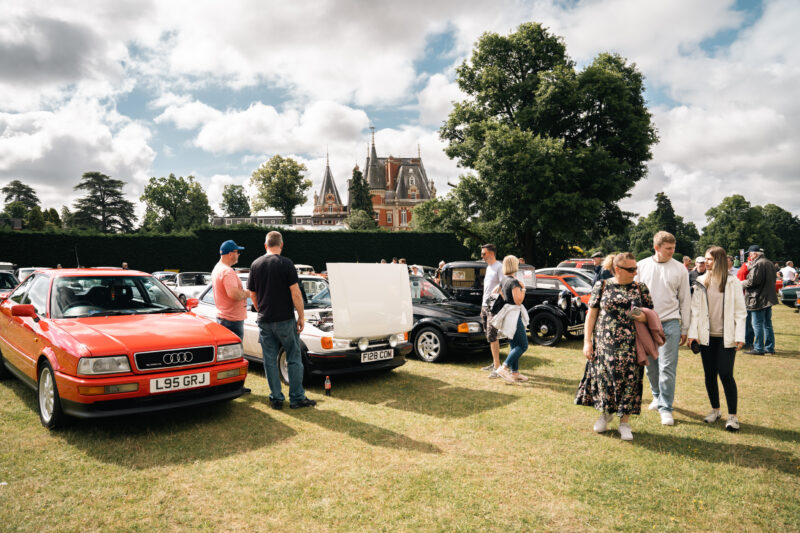
In a world where people live their lives 280 characters at a time, online communities have had to evolve. The irony is that many have responded by returning to the real world. Despite Silicon Valley’s attempts to keep us glued to our screens, many groups have used Facebook’s penchant for pinpointing our location to organise events in every neighbourhood. No matter where you live or what you drive, there’s likely to be at least one regular meet local to you, and the rise of venues such as Caffeine & Machine and The Motorist would have been impossible without a real-world audience to support them.
Rather than killing the car club, perhaps Facebook has just unplugged us.
Looking for automotive PR support?
If you’re looking for people who understand the industry, the media and the moving parts behind a good story, we should talk.
Talk to loop