The elusive promise of software-defined cars
Much has been written about the transition to electrified transport. But beyond the switch to electric propulsion, there’s another seismic shift underway in the car industry, one that is quietly reinventing the way vehicles are built.
Welcome to the age of the software-defined car.

Modern cars carry hundreds of ECUs (Electronic Control Units) dotted around the vehicle. Each is responsible for a specific task – perhaps monitoring the climate control, or interpreting the signals from the parking cameras – and each is sourced from a different supplier as a unique combination of hardware and software, wrapped up in an impenetrable black box.
But when the semiconductor shortage began to bite, availability of this dedicated silicon became sporadic. Car makers responded by ‘decontenting’ their products, cutting out features that relied on hard-to-source parts, leaving customers short-changed and condemning a generation of vehicles to a lottery of makeshift specifications.
Particularly affected were legacy chips that automotive suppliers had relied on for years, attractive for their low cost. Chip fabricators had little incentive to invest multi-billion-dollar sums in building new foundries to churn out silicon that was already past its sell-by date, and this only compounded an already difficult situation.
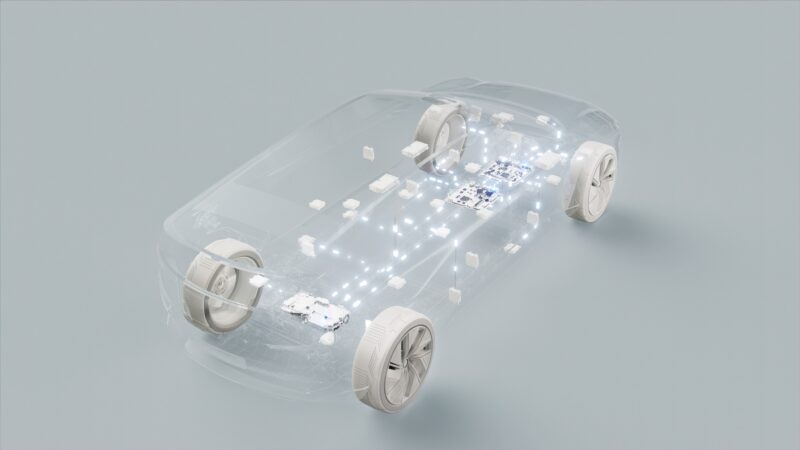
Modern cars carry hundreds of ECUs dotted around the vehicle, each with a specific task
Some manufacturers, however, took a different approach. Tesla deployed their army of developers to mitigate the effects of semiconductor supply issues by replicating certain functions in software rather than hardware. Volvo Cars, meanwhile, took that principle further and started out on a journey that has seen them radically rethink the entire vehicle architecture, a path since trodden by Volkswagen, Hyundai and others.
Their approach is to replace the hundreds of disparate ECUs with a single powerful central core that acts as the vehicle’s brain, with all the software housed within it. Separating the hardware from the software like this simplifies the entire vehicle architecture, and that in turn reduces an OEM’s exposure to the vagaries of long-lead supply chains.
With a powerful compute platform – based on NVIDIA’s Drive Orin system-on-a-chip in Volvo’s case – many more functions can be implemented in software, massively reducing the physical integration work needed to bring a new car to market. Volvo cites an example of a two-year project that was completed in just three months when brought in-house, while bugs that would ordinarily take weeks of back-and-forth with third-party suppliers to resolve can now be squashed in a single work-day.
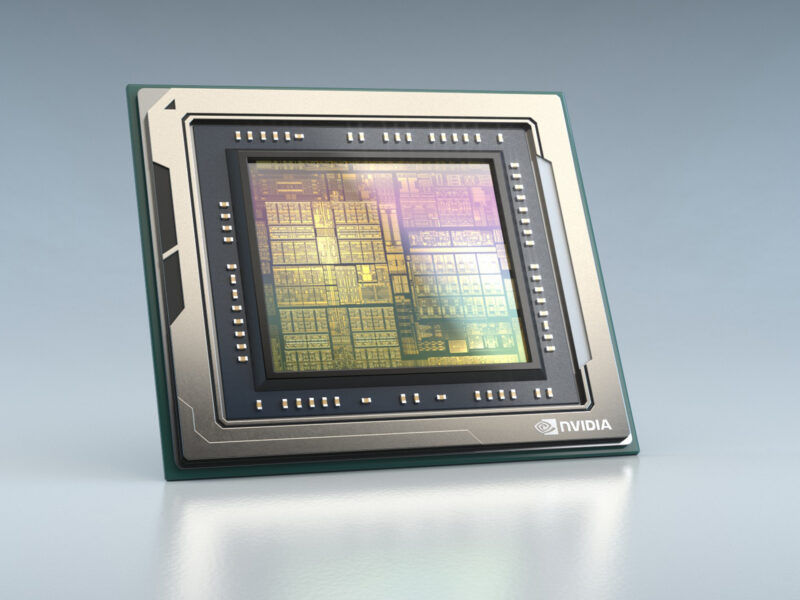
Nvidia’s Drive Orin system-on-a-chip offers a powerful choice for a more centralised approach.
Should history repeat itself and a particular chip become subject to its own chronic shortages, switching to an alternative platform might require little more than a recompile of the existing code. And as the demand for legacy silicon abates, chip fabs can concentrate on ramping up production of these more horsepower-dense processors, driven by the prospect of higher margins and longer lifecycles.
There are other benefits, too. With fewer ECUs throughout the vehicle, there’s less interconnecting wiring – Volvo estimates 700 metres less cabling per car – and that cuts both weight and complexity. Fewer electronics lead to a reduced bill-of-materials, too, with fewer rare earth metals and improved energy efficiency, something that’s increasingly important for electrified powertrains.
The current crop of electric vehicles remain stubbornly expensive, yet car manufacturers know they need to do more to bring the price down if they’re to attract more than just the early-adopters and the well-heeled. Replacing all that expensive hardware with a few reusable software modules is potentially one way to achieve that.
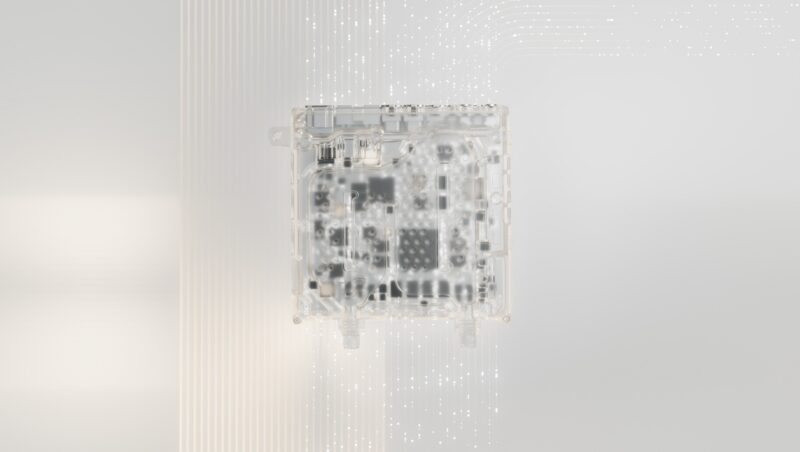
A central core replaces hundreds of disparate ECUs.
This centralised architecture may help win another battle – the fight-back against the relentless march of the tech giants. As OEMs ramp-up their own in-house development capability, it places them in complete control of the customer experience and retakes ground lost to the ambitions of Apple CarPlay and Google’s Android Automotive.
This software-defined approach also means that cars will no longer be at their best the day they leave the factory and degrade as they get older. Over time, new and improved features can be released over-the-air, adding functionality or improving the driving experience for the lifetime of the vehicle. Or at least that’s the promise.
The transition from car maker to software house has been a struggle for some OEMs. There have been high-profile examples of cars arriving to market while still exhibiting bugs many would consider showstoppers. In extreme cases, manufacturers have been forced to buy back cars from customers due to unresolvable software issues.
There’s a risk the industry will use the software-defined platform as an opportunity to rush to market with an immature product, in the hope they can resolve the outstanding issues later. This forces customers to act as unrewarded beta testers, and since buggy software can’t be resolved with a box of spanners, franchised dealers are powerless to assist them.
Consumers are becoming wise to this, though. Their experiences with smartphones and other devices have shown them the speed with which today’s tech can become yesterday’s, rendered obsolete and unsupported as dev teams move on to the new and the shiny.
Car makers are going to have to work hard to convince them otherwise. Because in reality, the era of mechanical engineering is dead. We are in a new industrial revolution now. And this one is powered by software.
Looking for automotive PR support?
If you’re looking for people who understand the industry, the media and the moving parts behind a good story, we should talk.
Talk to loop